Learn how to start your career in Car Mechanic Simulator 2026. Master the garage editor, diagnostic tools, and repair workflows with our comprehensive beginner guide.
Apr 7, 2026guide
Read more →Build, repair, and grow your garage in Car Mechanic Simulator 2026. Track cars, parts, engine swaps, junkyard finds, co-op features, workshop upgrades, and driving activities in one place.
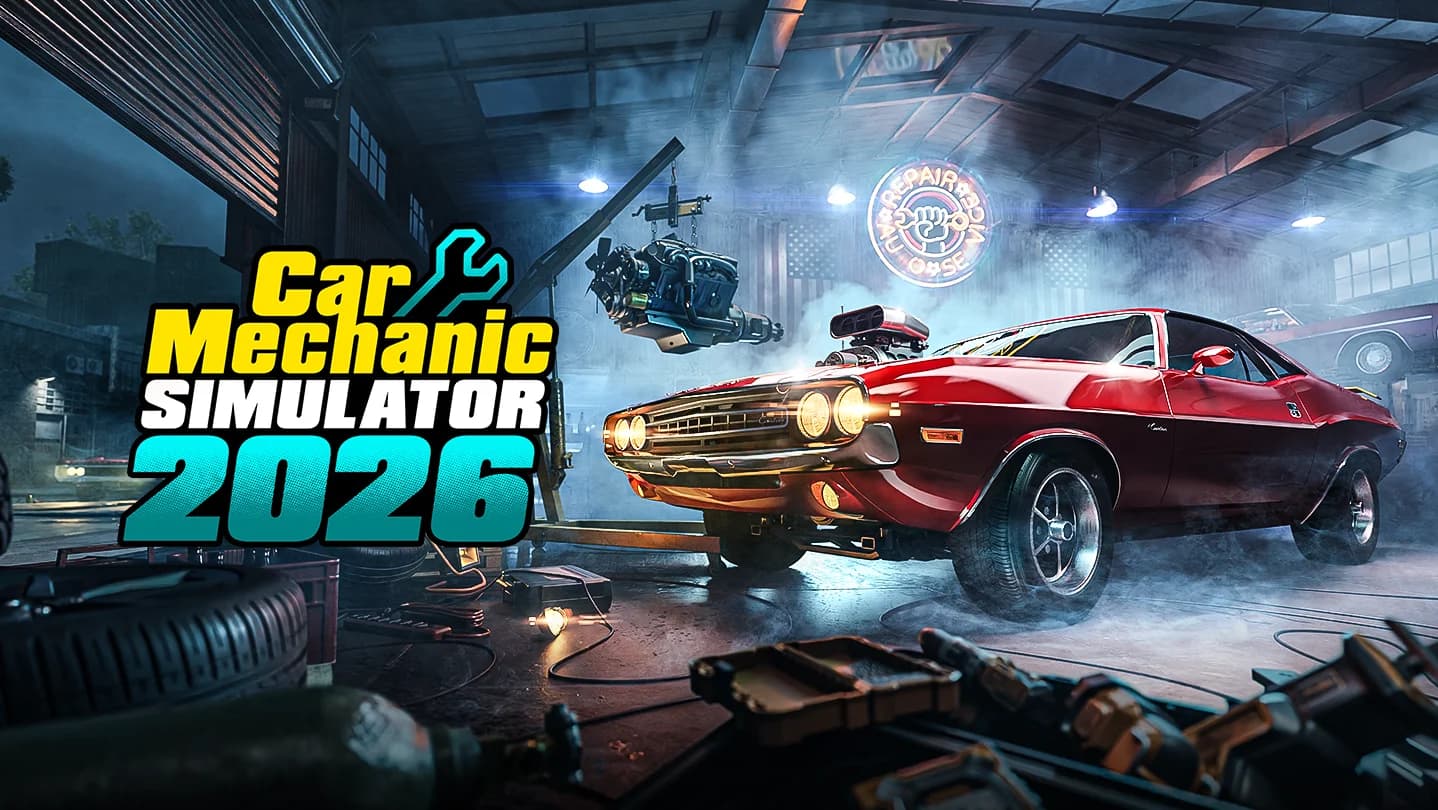
Discover the newest guides, tips, and content
Explore the new features in the Car Mechanic Simulator 2026 demo. Learn about modular engines, garage customization, and the new part ordering system.
Explore the new features, multiplayer modes, and garage editor revealed on the Car Mechanic Simulator 2026 Steam page. Get the full breakdown of the 2026 demo.
Master the automotive world with our comprehensive Car Mechanic Simulator 2026 Xbox One guide. Learn repair strategies, workshop upgrades, and restoration tips.
Enhance your garage with the best car mechanic simulator 2026 pc mods. Learn about modular engines, open-world maps, and licensed car replacements.
Dive into Car Mechanic Simulator 2026 with essential tips for beginners and seasoned mechanics. Learn efficient repair workflows, smart part management, and how to maximize your garage's potential.
Learn the essentials of Car Mechanic Simulator 2026 with our comprehensive beginner's guide. Master diagnostics, modular engines, and garage management.
Learn how to start your career in Car Mechanic Simulator 2026. Master the garage editor, diagnostic tools, and repair workflows with our comprehensive beginner guide.
Dive into our comprehensive Car Mechanic Simulator 2026 achievements guide, detailing every challenge from fixing your first car to becoming a millionaire mechanic. Unlock all 60 achievements with our expert tips and strategies.
Master Car Mechanic Simulator 2026 with the best settings for beginners. Learn about graphics optimization, diagnostic tools, and garage expansion priorities.
Master the new free roam, performance tracks, and diagnostic driving features with our comprehensive Car Mechanic Simulator 2026 test drive guide. Updated for the latest release.
Master the economy of CMS 2026. Learn the best car mechanic simulator 2026 money farming strategies, from junkyard flipping to high-end restorations.
Learn how to run Car Mechanic Simulator 2026 on Linux and Steam Deck. Includes Proton settings, file locations, and beginner tips for 2026.
Master the art of vehicle diagnostics and repair in Car Mechanic Simulator 2026 to effortlessly pass every inspection and maximize your garage's reputation and profits.
Master the new features of Car Mechanic Simulator 2026 on Epic Games and Steam. Learn about co-op mode, modular engines, and workshop management.
Dive into our exclusive car mechanic simulator 2026 developer interview. Learn about backend scaling, 3D modeling in Blender, and the future of community modding.
Master your garage on macOS with our comprehensive Car Mechanic Simulator 2026 Mac guide. Learn about performance optimization, new 2026 features, and beginner tips.
Explore the new co-op mode, modular engine systems, and system requirements in Car Mechanic Simulator 2026. Learn how to find the best deals on Instant Gaming.
Master the art of automotive restoration with our comprehensive Car Mechanic Simulator 2026 how to restore car step by step guide. Learn diagnosis, disassembly, and profit-making strategies.
Level up your repair game with our Car Mechanic Simulator 2026 advanced tips guide. Learn expert strategies for engine swaps, tuning, and maximizing profit.
Get the car mechanic simulator 2026 system requirements full list. Explore new modular engines, garage customization, and PC performance tips for CMS 2026.
Explore the new multiplayer features, co-op mechanics, and car mechanic simulator 2026 crossplay status in the latest workshop simulation hit.
Learn how to source, repair, and optimize vehicle components with our comprehensive Car Mechanic Simulator 2026 parts guide. Maximize profits and efficiency today.
Learn the essential steps for Car Mechanic Simulator 2026 how to fix cars. Master diagnostics, engine teardowns, and garage management in the latest simulator.
Master the latest simulation from PlayWay. Explore new features, garage management tips, and a full breakdown of the Car Mechanic Simulator 2026 demo.
Master the art of auto repair with our comprehensive Car Mechanic Simulator 2026 tips and tricks. Learn how to flip cars for profit, level up fast, and find hidden parts.
Master the art of vehicle customization with our comprehensive Car Mechanic Simulator 2026 tuning guide. Learn part salvage, dyno testing, and profit-flipping strategies.
Master the art of vehicle restoration in Car Mechanic Simulator 2026. Learn how to find barn finds, rebuild engines, and maximize profit with our expert guide.
Master the garage with our comprehensive guide to Car Mechanic Simulator 2026 on Game Pass. Learn about multiplayer, engine restoration, and garage management.
Comparing Car Mechanic Simulator 2026 on Steam vs. Epic Games Store. Discover modding support, exclusive content, and performance benchmarks to choose the right version.
Explore the new features of Car Mechanic Simulator 2026 on Steam. Learn about the modular engine system, garage customization, and time management mechanics.
Your complete guide to cars, engines, parts, garage management, and co-op play
Start with customer orders, learn to inspect before buying parts, and use the garage computer for all purchases. The first hours in Car Mechanic Simulator 2026 are about building a repair routine, controlling costs, and unlocking the skills that make jobs faster.
Open the Orders list with the O shortcut and pick a customer job. Orders are the main income loop and determine which car you work on next.
Use CAR STATUS from the Pie Menu to see order requirements, vehicle overview, and which parts or systems need attention.
Start with Examination Mode, then move to specialized diagnostic tools when a fault is hidden. This prevents unnecessary purchases and protects your early credits.
Buy parts through the garage Computer or the quick Tablet. The shop supports search, filters, shopping cart, standard delivery, and instant delivery.
Refill and change fluids exactly as the order requires. Engine oil, coolant, brake fluid, and power steering fluid tasks can block job completion if skipped.
Priority early upgrades: Swift Hands for screwing speed, Strong Arms for part removal, First Glance for auto-examination, Visual Inspection for faster checks, and Deep Pocket for inventory space.
Customer orders are the backbone of Car Mechanic Simulator 2026 workshop play. A good order routine covers diagnosis, parts work, fluid service, and job turn-in without skipping steps.
Open the Orders list from the Pie Menu or press O. Each order shows what the customer wants done and links to the car you will receive.
Review the vehicle's order requirements, engine details, parts list, and system overview through CAR STATUS before touching anything.
Refill tasks include coolant, windshield washer, power steering, and brake fluid. Change tasks require draining first, then refilling with fresh fluid.
Use Examination Mode and the correct tool for any part that cannot be visually confirmed. This is especially important for internal or system-based faults.
Engine swaps and tuning are limited to player-owned vehicles. Customer cars do not allow these systems, so plan your work accordingly.
Confirm that all order conditions are satisfied before submitting. Incomplete fluid or parts work will prevent the job from closing.
Car Mechanic Simulator 2026 provides both visual inspection and specialized test tools. Each method targets a different fault type, and knowing which tool to use is the fastest way to stop guessing and start fixing.
Switch to Examination Mode from the Pie Menu to inspect parts without removing them. Condition shows as a percentage, and parts needing specialized tests display the required tool.
Connect to the OBD port for electronically linked parts. Does not work on older cars without OBD support, so unsupported vehicles need alternate methods.
Use this when overall engine health is in question. Supported parts show a prompt indicating the Compression Tester can check them.
More specific than the OBD Scanner, used for components requiring direct electrical resistance or connection testing.
Measures tire wear condition directly on the wheel. Use before turning in jobs that include tire condition requirements.
Diagnoses fuel-related parts and systems that cannot be confirmed through visual examination or the OBD port alone.
Move the car to the Test Path and run either the Brakes test or Suspension test. Covers front and rear brakes plus front and rear suspension.
The garage Dyno shows measured power, factory power reference, and gain or loss. Use after engine work to confirm output and tune results.
Your garage in Car Mechanic Simulator 2026 is a full workshop built around specialized stations. Each tool handles a specific part of the repair loop, and placing them efficiently reduces backtracking on every job.
Raises the vehicle for underside access. Use it for suspension, brakes, exhaust, oil drain, and all underbody work.
The main garage hub for parts orders, order management, used parts browsing, and equipment purchases. The Tablet gives quick access without walking to the desk.
Repairs damaged parts up to 50% condition through a timing minigame. Use it to save money instead of buying new parts on every job.
Salvages unwanted parts into raw materials. Use it to convert low-value leftovers into resources or cash.
Separates tires from rims and installs tires onto rims. Required whenever wheel assemblies need rebuilding.
Balances wheels through a green-zone minigame. Use it after building or servicing wheel assemblies for smooth results.
Resurfaces brake discs up to 50% condition. Use it when discs are repairable rather than replacing them outright.
Repairs body parts up to 50% condition with a timing-based process. Use it during body restoration or profit-focused rebuilds.
Pulls and installs complete engines. Required for engine swaps and full engine removal jobs on player-owned cars.
Lets you build, service, rotate, and inspect engines outside the vehicle. Use it for deep engine work or building from scratch.
Separates and joins spring and shock absorber combinations. Required during suspension rebuilding.
Drains engine oil from a lifted vehicle. Use it before oil-related work and before removing parts that require draining first.
Recharges flat batteries and returns them to inventory. Use it when the battery is flat but still worth saving.
Aligns headlight beams through a target-based minigame. Use it after repairs that affect lighting position.
Aligns wheels for straight driving and correct handling. Use it after suspension or wheel-related work.
Use the Dyno for power checks, Paintshop for painting cars and parts, Test Path for brake and suspension testing, and Car Wash for cleaning before delivery.
Read the Car Status screen before you buy, repair, or sell
Use this guide as your dashboard decoder. The General Info tab gives the big-picture condition of the car, the Engine tab shows performance and swap-ready information, the Parts tab helps you find worn or missing components, and the Sell tab tells you how the game values the build. For profit flips, Configuration Compliance is one of the most important numbers on the entire screen.
Shows
Model, year, mileage, drivetrain, body condition, frame condition, interior condition, configuration compliance, configuration compliance bonus, stock engine, stock wheels
Why It Matters
This is the best first-stop tab when deciding whether a car is worth restoring or returning to factory spec.
Best Use
Check body, frame, and interior percentages before spending on parts; compare stock engine and stock wheels when building for resale.
Shows
Installed parts classified as Compliant, Noncompliant, or Tuning
Why It Matters
Higher configuration compliance increases vehicle value and can add a configuration compliance bonus.
Best Use
For a resale build, replace noncompliant or tuning parts with stock-style parts when possible.
Shows
Measured power, factory power, gain or lose, engine family, engine type, tuning value, and compatible engine list for the vehicle
Why It Matters
This tab tells you whether the current setup actually performs better than stock and what engine options fit the car.
Best Use
Use it before an engine swap, after dyno work, or when comparing a stock build against a tuned build.
Shows
Every installed part with condition percentage, quality, and status markers such as Installed, Not Installed, and Damaged
Why It Matters
This is the fastest way to locate hidden weak points without walking around the vehicle in mechanic mode.
Best Use
Search for damaged parts before finishing a job or listing a car for sale.
Shows
Car Value, Sell Price, and selling methods including Instant Sell, Marketplace Listing, and Auction House
Why It Matters
The sell screen tells you what the game thinks the build is worth right now and how you want to cash out.
Best Use
Use Instant Sell for quick CR, Marketplace Listing for direct buyer-style selling, or Auction House when you want a bidding route.
Shows
Metric: KMH, km, kg, N.m, HP; Imperial: MPH, mi, lbs, lbf.ft, HP
Why It Matters
Changing units affects how speed, distance, torque, and weight are displayed across the game.
Best Use
Set your preferred unit system before comparing dyno runs or drivetrain data.
Buy smarter parts and waste less CR
Open the shop from the garage computer and treat it like a workflow, not just a catalog. Search and filter first, keep the shopping cart clean, use delivery options based on urgency, and combine the shop with inventory storage, warehousing, scrapping, and repair tools so you do not overspend on brand-new parts every time.
The game separates buying into Main Shop, Engine Shop, Body Shop, Wheel Shop, Interior Shop, License Plate Shop, Decorations and Tools, and Used Parts Market.
The shop includes Search Parts, Filter By, and Sort By tools to narrow large part lists quickly.
The cart tracks the total cost of your order and supports Add to Cart, Remove from Cart, and Checkout.
You can use Standard Delivery with delivery time or Instant Delivery with a delivery fee in CR.
The more you spend, the higher your discount level becomes. The shop shows discount level, current discount, next level, and progress in CR.
Inventory lets you browse, search, sell, scrap, and store parts. The warehouse adds extra storage and unlocks more slots as you progress.
Turn cheap cars into cleaner, higher-value sales
A profitable flip starts long before the Sell tab. First, buy a car you actually own from places like the Auction House, Car Salon, junkyard, or barns. Then improve the factors the game values most: part condition, body and frame condition, interior condition, and especially configuration compliance. Finally, pick the selling route that matches your risk and speed.
Only player-owned cars can be sold, tuned, repainted, or engine swapped. Good acquisition sources include the Car Salon, Auction House, junkyard, and barns.
Before buying too many parts, read Car Value and Sell Price, then inspect part condition, body condition, frame condition, interior condition, and configuration compliance.
The game directly ties higher configuration compliance to higher vehicle value. Use the stock engine and stock wheels information to move a build closer to factory-style spec.
The Repair Table, Welder, Interior Detailing Toolkit, and Brake Lathe can all restore condition up to a maximum of 50%.
Combine the Used Parts Market, junkyard visits, bidding in the Auction Hall, Buy Now options when needed, and inventory scrapping or storage to control costs.
Repair or replace damaged parts, fill missing fluids, wash the car, and paint it if needed before sale. The game also lets you run the dyno to review measured power versus factory power.
Use Instant Sell for immediate CR, Marketplace Listing for a buyer-style listing route, or Auction House for a bid-based sale.
Plan a swap around tools, fluids, and drivetrain compatibility
Use the engine crane and engine stand as your core swap stations. The crane removes and installs complete engines, while the stand is where you rebuild an old engine or create a brand-new one from scratch. Before swapping, drain fluids, clear incompatible accessories, and read the drivetrain tag at the end of the engine name so you do not create a parts mismatch across the gearbox, drive shaft, differentials, and transfer case.
You need an Engine Crane and an Engine Stand. Both can be bought from the Decorations and Tools shop through the garage computer.
Before using the engine crane, drain the engine oil. Coolant and other spill-prone fluids should also be drained during disassembly.
Use Pull Out on the crane to remove the complete engine. If you are changing engine families, remove incompatible accessories first.
The crane can open a comparison menu that shows power, torque, and performance curves side by side before installation.
After the engine drops into the bay, reinstall the exhaust, gearbox, drive shaft, cooling system, air intake, and remaining accessories.
The engine stand is ideal when you want to restore a worn engine or assemble a fresh one piece by piece.
The game includes many powertrain families across multiple layouts and drivetrains.
Engine Families, Layouts, and Swap Basics
Car Mechanic Simulator 2026 introduces a modular engine system and a large pool of swappable engine families. The game's data-backed family list spans Inline 3, Inline 4, Inline 5, Inline 6, V6, V8, V10, V12, Flat 4, and Electric, while vehicle-specific engines remain tied to individual cars instead of appearing as normal swap families.
Naturally aspirated and turbocharged inline-four family used across multiple drivetrain setups.
Good all-around starter and mid-tier swap family for common workshop builds.
Diesel inline-four family that uses glow plugs and a Glow Plug Control Module.
Best for players who want to distinguish diesel part logic from gasoline builds.
Supports carb variants and 16-valve versions, including mid-engine configurations.
Useful for comparing classic compact builds versus more specialized mid-engine setups.
Naturally aspirated and turbocharged variants with both RWD and 4X4 support.
A practical family for players testing off-road or traction-focused builds.
Confirmed families include naturally aspirated, twin-turbo, supercharged, and turbocharged variants.
Strong choice when you want more complex forced-induction comparisons than entry-level inline engines.
RWD-only V8 family with a six-pack intake option.
Fits classic muscle-style projects and higher-power rear-wheel-drive builds.
Multiple RWD V8 families expand the number of available big-engine swap paths.
Ideal for players comparing different V8 families before expensive rebuilds.
The crane removes or installs complete engines, while the stand is used for full rebuilds.
Use this before any major swap so you drain oil first and prepare a full engine assembly correctly.
Every Fluid Job, Tool, and Refill Order
The game tracks six fluids: engine oil, coolant, brake fluid, power steering fluid, windshield washer fluid, and fuel. Fluid jobs appear often in customer orders, and the system distinguishes simple refills from full changes that require draining the old fluid first.
Check whether the order says refill or change. Refill means top up the reservoir, while change means drain the old fluid and then refill with new fluid.
Use the Oil Drain for engine oil jobs and the Drain Tool for coolant, brake fluid, power steering fluid, and windshield washer fluid jobs.
Oil jobs commonly include both oil replacement and oil filter replacement. Drain the oil, replace the old filter in Mechanic Mode, then refill through the Oil Fill Plug.
Use the Drain Tool on the Coolant Reservoir to empty the system, then refill through the correct reservoir type and cap setup used by the vehicle.
Brake fluid refills require removing the Brake Servo Cap before adding fluid. Full brake-fluid changes follow the drain-then-refill order.
Power steering fluid refills require removing the reservoir cap and adding fluid to the matching reservoir type.
Windshield washer fluid uses the Drain Tool and its own reservoir. Fuel is handled separately through refueling or EV battery charging depending on the vehicle.
Most failed fluid jobs come from forgetting a cap, skipping the drain step, or missing the oil filter portion of an oil change order.
Wheel Setup, Tire Types, and Alignment Basics
Wheels in Car Mechanic Simulator 2026 are built from rims plus tires, and each assembled wheel must be balanced before installation. The system tracks size, width, profile, and ET offset, while tire choice changes the role of the build from normal road use to race, slick, vintage, or off-road setups.
What Co-Op Adds in Car Mechanic Simulator 2026
Car Mechanic Simulator 2026 is the first entry in the series to put workshop co-op front and center. Steam lists Online Co-op as an official feature, and co-op coverage confirms that players can invite friends into the shop to split jobs such as diagnostics, repairs, and part management.
The Steam store page lists Online Co-op as a supported feature alongside Single-player and Family Sharing.
Co-Optimus lists Online Co-Op for up to 4 players.
Players can split diagnostics, repairs, and part management while running the same workshop together.
The co-op listing includes Drop In/Drop Out support so friends can join or leave during an active session.
This is the first time the series shifts away from its long-running solo-only identity and makes cooperative garage management a headline feature.
The co-op mode launches next to 150+ cars, over 500 configurations, 8,000+ parts, garage customization, a day and night cycle, and a modular engine system.
A practical team setup is one player diagnosing and tearing down, one handling inventory and buying, one rebuilding assemblies, and one testing or moving finished cars.
The full game is planned for release in 2026, and Steam already offers a single-player demo to try the core repair mechanics.
Best Skills to Unlock First in Car Mechanic Simulator 2026
The skill system covers work speed, order income, sourcing, and car evaluation. Upgrades are purchased with CR and each skill can be leveled to MAX. Start with work-speed and inspection skills, then move into earnings, sourcing, and valuation once your garage loop is stable.
These skills improve your minute-to-minute repair flow and reduce the friction of basic jobs.
Increased screwing speed. Speeds up one of the most repeated actions in the game.
Increased part removal speed. Helps with teardown-heavy jobs and rebuilds.
Parts are automatically examined when you approach them. Cuts down manual checking and accelerates diagnosis.
Increased examining speed. Makes routine inspection work faster on customer cars.
These upgrades improve how much you earn and how often extra opportunities appear.
Increased chance for bonus orders. Adds more profitable job opportunities to the garage loop.
Increased chance for bonus orders. Works toward a stronger order pipeline.
Increased XP bonus. Helps level progression while doing normal work.
Increased CR bonus. Directly improves cash rewards from jobs.
Increased chance for mystery case. Adds another reward layer to completed work.
These upgrades help when you rely on junkyard trips, used parts, and project-car sourcing.
Increased pile searching speed. Improves junkyard efficiency when hunting cheap parts.
Reduced junkyard prices. Makes junkyard runs cheaper for restoration-focused play.
Increased used parts market refresh rate. Helps you cycle second-hand inventory more often.
These are support skills that make longer sessions and car-flipping decisions easier.
Increased inventory size. Useful for storing more parts during larger projects.
Increased car valuation accuracy. Helpful when buying, restoring, and reselling vehicles.
Junkyard, Auction Hall, and Car Salon Explained
Car Mechanic Simulator 2026 gives you three major off-site sourcing locations plus an in-garage used-parts alternative. Each one supports a different goal: cheap parts, project-car acquisition, or direct vehicle purchase.
Find cheap parts and buy rough vehicles
Best for: Budget restorations and part huntingAcquire vehicles through bidding or direct purchase
Best for: Project cars for restoration and resalePurchase vehicles directly in person
Best for: Players who want a cleaner acquisition pathBuy second-hand parts from the garage computer
Best for: Quick sourcing without travelUnderstand what increases resale value
Best for: Players restoring cars for maximum returnDyno, Speed Track, and Drag Racing Performance Tools
Use the dyno to understand engine output, then move to the track to see how that power translates into acceleration, braking, handling, and competitive racing. The game also supports ECU tuning and carburetor tuning, both feeding into the car's Tuning Value.
Purpose
Measure actual engine output
How It Works
Run Dyno at the dyno station to generate a power curve across the RPM range.
Best Use
Baseline testing before and after tuning
Purpose
Read engine performance data outside the dyno screen
How It Works
Open Car Status and use the Engine tab to review current performance and installed engine information.
Best Use
Quick comparison while building or swapping engines
Purpose
Measure launch and straight-line pace
How It Works
Start on the test track and accelerate to begin timing.
Best Use
Checking whether extra power and gearing changes improved speed
Purpose
Measure agility and directional control
How It Works
Drive the weaving course cleanly without leaving the track.
Best Use
Evaluating suspension, tires, and weight distribution
Purpose
Measure stopping performance
How It Works
Follow the test-path instructions and hold brake when prompted.
Best Use
Validating brake-focused setups
Purpose
Measure ride stability and control
How It Works
Run the suspension test on the speed track.
Best Use
Checking chassis stability after setup changes
Purpose
Tune fuel-injected engines for more performance
How It Works
Install a tuning ECU, open Tune parts, and use the tuning minigame.
Best Use
Extracting more power from injected engine builds
Purpose
Tune carbureted engines
How It Works
Install a tuning carburetor and balance the tuning wheels in the minigame.
Best Use
Improving older carbureted performance builds
Purpose
Head-to-head racing with owned cars
How It Works
Enter a race using a car you own and choose category, race type, and event structure.
Best Use
Competitive proof after testing and tuning
Body, Interior, and Garage Customization Options
Customization in Car Mechanic Simulator 2026 covers the car itself and the garage. Players can repair body panels, repaint cars, tint windows, swap interior pieces, and redesign the garage through the Garage Editor.
Repair, repaint, and clean the exterior
Change the look of the windows
Customize seats, benches, and steering wheels
Stock interior helps resale value
Build a garage layout that matches your workflow
Everything you need to know about Car Mechanic Simulator 2026
Car Mechanic Simulator 2026 is a car repair and garage management simulation game developed by Red Dot Games and published by PlayWay S.A. on Steam. It features 150+ cars, 8,000+ parts, a modular engine system, and online co-op.
Yes. A single-player demo for Car Mechanic Simulator 2026 is available on Steam. Download it from the official store page to try the core repair mechanics before the full release.
Yes. Car Mechanic Simulator 2026 supports online co-op, allowing multiple players to work together in the same garage session simultaneously.
Car Mechanic Simulator 2026 launches with 150+ cars and 500+ configurations, supported by more than 8,000 individual parts across all vehicle systems.
Car Mechanic Simulator 2026 introduces a fully modular engine system, engine swaps, expanded garage customization with a multi-level parking system, online co-op, and a larger car and parts lineup than any previous game in the series.
Car Mechanic Simulator 2026 is available on Steam. Visit the official Steam store page at store.steampowered.com/app/2692660 to wishlist, download the demo, or purchase when the full game launches.
Join the Car Mechanic Simulator 2026 community on Discord for guides, updates, and discussions!